Re: Darstellung von Gott Vater
Verfasst: 07.09.2011, 12:07
Was ist, wenn die Ikone unkanonisch ist? Na? 
Ein Projekt von www.orthpedia.de
http://www.orthodoxes-forum.de/
Das habe ich ja versucht zu zeigen, dass sie eben schon kanonisch ist. Und das lässt sich eigentlich ja leicht zeigen.Nassos hat geschrieben:Was ist, wenn die Ikone unkanonisch ist? Na?
Hier der LInk:Concerning Rublev's "Trinity icon": Some believe that he depicts the Holy Trinity, in the form of three angels, appearing to Abraham and Sarah; thus, the title, "the Hospitality of Abraham". The traditional view is that one of these three angels is God the Son, in the form of an angel. He prefigures or typifies His Incarnation. quote]The other two angels cannot be types of God the Father and the Holy Spirit, because they typify nothing and nowhere does the Church teach that the Father and Spirit ever took on materiality. We have never seen the Father, and the Holy Spirit has appeared only in the form of a dove or fire. Since they are immaterial, there is nothing to typify. Why is it that none of the Fathers knowing of the visitation of the three angels to Abraham never referred to them as a Theophony of the Holy Trinity? Not Saint Theodore, Saint John of Damascus or Saint John Chrysostom, etc. None of them.[/
Let us suppose "the Trinity icon" (e.g., Rublev's) is, in fact, a representation of the Trinity, why is God the Son singled out while the Father and Spirit have no mark of distinction? God the Son, nor Christ the man is not greater than the other two persons of the Trinity. If, indeed, the Three Persons appeared in the form of angels, they came as equals. Abraham bows before only one of the angels. Is this not an offense to the other Persons? Must we think the Son to be superior to the Others? Why are they not identified and worshipped by Abraham as Father and the Holy Spirit? Which of the the holy Fathers describe to us about this incident? Do they say that the three angels are a Theophany of the Trinity? That the Father and Spirit became incarnate, not as a man but as angels?
Hallo,Nassos hat geschrieben:Leicht zeigen?
Ist dir eigentlich schon mal durch den kopf gegangen, dass du falsch liegen könntest?
Wer viel labert, macht viele Fehler. Ich laber aus Erfahrung, glaubs mir. Gibt kein schöneres Gefühl, wenn man festgestellt hat, dasso man schief gewickelt ist und wie man dann vor Gott steht.
Kannst du mich verstehen?
Verstehe ich nicht so ganz? (Ehrlich!)christodoulos hat geschrieben: Manchmal liegen die ja nicht falsch weil sie dumm sind oder es nicht besser wüssten - Azkoul liegt hier falsch, weil er (und sein Vater) sich es zum Ziel gemacht haben - die orthodoxe Kirche von "Lateinertum" zu befreien. Sie verfolgen nun dieses Ziel und merken gar nicht mehr - dass sie selbst zu "Inquisitoren" geworden sind.
Hallo,Ilija hat geschrieben:Verstehe ich nicht so ganz? (Ehrlich!)christodoulos hat geschrieben: Manchmal liegen die ja nicht falsch weil sie dumm sind oder es nicht besser wüssten - Azkoul liegt hier falsch, weil er (und sein Vater) sich es zum Ziel gemacht haben - die orthodoxe Kirche von "Lateinertum" zu befreien. Sie verfolgen nun dieses Ziel und merken gar nicht mehr - dass sie selbst zu "Inquisitoren" geworden sind.
Hallo Nassos,Nassos hat geschrieben:viewtopic.php?p=14561#p14561
viewtopic.php?p=14563#p14563
viewtopic.php?p=14564#p14564
viewtopic.php?p=15144#p15144 (Darstellbarkeit Hl. Geist)
viewtopic.php?p=15186#p15186
viewtopic.php?p=15188#p15188
viewtopic.php?p=15193#p15193
viewtopic.php?p=15377#p15377
nur ein paar Beispiele aus den frühen Zeiten dieses Stranges zu diesem Thema. Alles Irrtum?


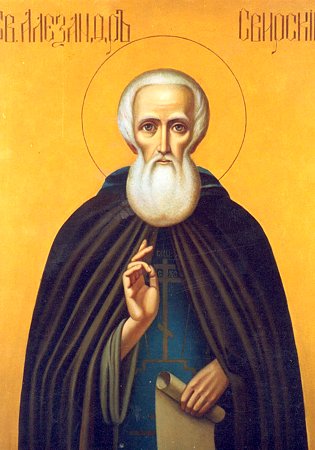
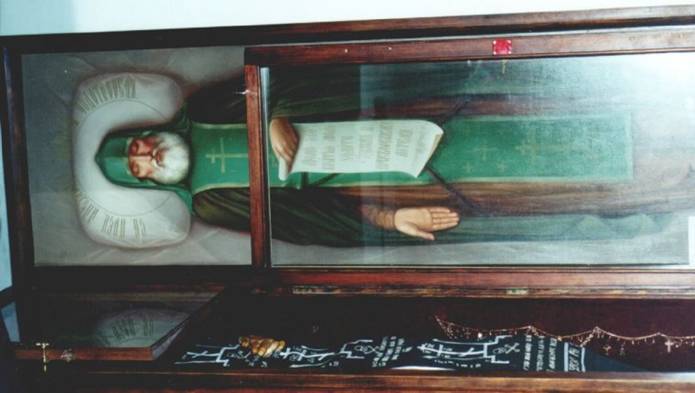

(Joh 6,46)Niemand hat den Vater gesehen außer dem, der von Gott ist; nur er hat den Vater gesehen.
Hallo Igor,Igor hat geschrieben:Hl. Alexander von Svira ist die Dreiheit in Gestalt von drei Engeln erschienen. Dies ist also kein Argument für die Darstellung von Gott-Vater auf Ikonen und für die Infragestellung des o.g. Konzils.
(Joh 6,46)Niemand hat den Vater gesehen außer dem, der von Gott ist; nur er hat den Vater gesehen.
PS Ich war vor einigen Jahren auf Pilgerreise bei den Reliquien - es ist wirklich ein Wunder!
In Christo
Igor
Thus the Seventh Ecumenical Council declares: "Eternal be the memory of those who know and accept and believe the visions of the prophets as the Divinity Himself shaped and impressed them, whatever the chorus of the prophets saw and narrated, and who hold to the written and unwritten tradition of the Apostles which was passed on to the Fathers, and on account of this make icons of the Holy things and honour them." And again: "Anathema to those who do not accept the visions of the prophets and who reject the iconographies which have been seen by them (O wonder!) even before the Incarnation of the Word, but either speak empty words about having seen the unattainable and unseen Essence, or on the one hand pay heed to those who have seen these appearances of icons, types and forms of the truth, while on the other hand they cannot bear to have icons made of the Word become man and His sufferings on our behalf." St. Nicodemus the Hagiorite, in his prolegomena to the Seventh Ecumenical Council, sums up the Council's decrees on this subject as follows: "The present Council, in the letter which it sent to the Church of Alexandria, on the one hand blesses those who know and accept, and therefore make icons of and honour, the visions and theophanies of the Prophets, as God Himself shaped and impressed them on their minds. And on the other hand it anathematizes those who do not accept the iconographies of such visions before the incarnation of God the Word. It follows that the Beginningless Father must be represented in icons as He appeared to the Prophet Daniel, as the Ancient of Days."
Es hat ja vorher eine russische Synode gegeben die genau diese Darstellung erlaubt hatte. Und keine Lokalsynode kann gegen ein Ökumenischen Konzil entscheiden.The Moscow council of 1666 was convened by the Tsar in order to defrock the righteous Patriarch Nikon; but only 16 years later, in 1682, this decision of the Moscow council was annulled by the Eastern Patriarchs. In any case, the prime force at the council, "Metropolitan" Paisios Ligarides, had already been defrocked by the Patriarch of Jerusalem for his crypto-papism. Thus far from expressing the Holy Tradition of the Orthodox Church against westernizing influences, the "Pan-Orthodox" council of Moscow actually represented a victory for westernism! Which is probably why Russia was flooded with the supposedly illegal icons of the Holy Trinity precisely after this council!
As for the Constantinopolitan council of 1780, it was convened by the same Patriarch, Sophronios II, who four years earlier had unjustly condemned Athanasios of Paros for following the laws of the Church in refusing to carry out memorials for the dead on Sunday instead of Saturday
Da sind wir völlig einer Meinung!christodoulos hat geschrieben:Hallo Igor,
ja genau, in Form von drei Engeln - also eine Erscheinung Gottes. Auch Gott Vater wurde in dieser Form symbolisiert und auch der Hl. Geist. Genau wie unter den Eichen von Mambre. Auch dort erschien Gott Vater in einer Form - als Mann bzw. Engel und auch der Hl. Geist.
Genau das war ja mein Argument - man darf nicht glauben die Ikone der Hl. Dreiheit sei eine Ikone ihres Wesens oder ihrer Gestalt - sondern eine Ikone - einer ihrer Erscheinungen.
Das heißt Gott Vater bleibt undarstellbar - und doch kann man ihn darstellen in der Form wie er erschienen ist. Eine Ikone ist auch keine Darstellung von Naturen sondern von Personen.
Da hatte ich Dich wohl in Deinem oberen Beitrag falsch verstanden; manchmal können eben zu umfangreiche Informationen auf die falsche Spur führen – wenn man diese nicht genau rezipiert.christodoulos hat geschrieben:Es hat ja vorher eine russische Synode gegeben die genau diese Darstellung erlaubt hatte. Und keine Lokalsynode kann gegen ein Ökumenischen Konzil entscheiden.
 Die ikonografische Interpretation der „Heiligen Dreieinigkeit“ des Hl. Andrei Rubljow
Während die menschliche Seele die Konventionalität jeder Abbildung der Allheiligen Dreieinigkeit apophatisch anerkennt, strebt sie auf der kataphatischen Ebene das göttliche, persönliche Geheimnis des dreihypostatischen Gottes durch die Offenbarung der „bildnerischen Erkenntnis Gottes“ anzurühren. Deshalb versuchten viele Kunsthistoriker und Theologen, die Personen in der rubljow’schen „Dreieinigkeit“ konkret zu bestimmen. Die Varianten dieser Bemühungen werden vom Diakon Georgy Malkov in diesem Artikel dargeboten.